 Skip to content

Steel filing cabinet sizes are the first thing to lock down before you measure a single wall. A while back, a facilities manager emailed us a photo of an empty hallway with a tape measure stretched across the floor. The question was short: “How many cabinets fit here without blocking the door?” It’s the same question we hear from offices in Manila, Dubai, and Lagos, and it never has a one-line answer — because the right size depends on the paper you file, the room you have, and the people who’ll pull drawers open sixty times a day. This guide walks through the standard steel filing cabinet sizes, drawer by drawer, so your next order doesn’t come with surprises.
Standard Steel Filing Cabinet Sizes at a Glance
Before anything else, get comfortable with the three dimensions that define every cabinet: width, depth, and height. Here are the typical ranges for the most common configurations (exact numbers vary by brand, so always confirm against the spec sheet before ordering):
| Type | Width | Depth | Height |
|---|---|---|---|
| 2-drawer vertical, letter | 15″ | 25″ | 28.4″ |
| 4-drawer vertical, letter | 15″ | 25″ | 52″ |
| 2-drawer vertical, legal | 18.25″ | 26.5–28.5″ | 28.4″ |
| 4-drawer vertical, legal | 18.25″ | 28.5″ | 52″ |
| Lateral (2–5 drawer) | 30–42″ | 15–20″ | 26–40″ |
Notice the pattern: a vertical steel filing cabinet is narrow and deep, built for lining up along a wall. A lateral cabinet is wide and shallow, built for spreading files sideways. Your room layout usually decides which family you belong to — the paper decides the rest.
Letter vs. Legal: The Filing Cabinet Dimensions That Matter Most
This is the fork in the road, and it costs real money to get wrong. Letter-size cabinets fit standard 8.5″ x 11″ documents and run about 15″ wide. Legal-size cabinets fit 8.5″ x 14″ documents, run about 18.25″ wide, and sit 3–4 inches deeper because legal folders are longer.
If your archive is mostly contracts, deeds, and regulatory filings, go legal. If it’s standard correspondence, invoices, and HR files, letter will save you floor space and roughly 15–20% of the steel. In markets where A4 and F4 paper dominate — most of Asia, for example — A4-compatible letter-width cabinets are usually the practical pick. A quick rule we give every buyer: measure the widest folder you’ll ever file, add an inch, and that’s the minimum interior width you need.
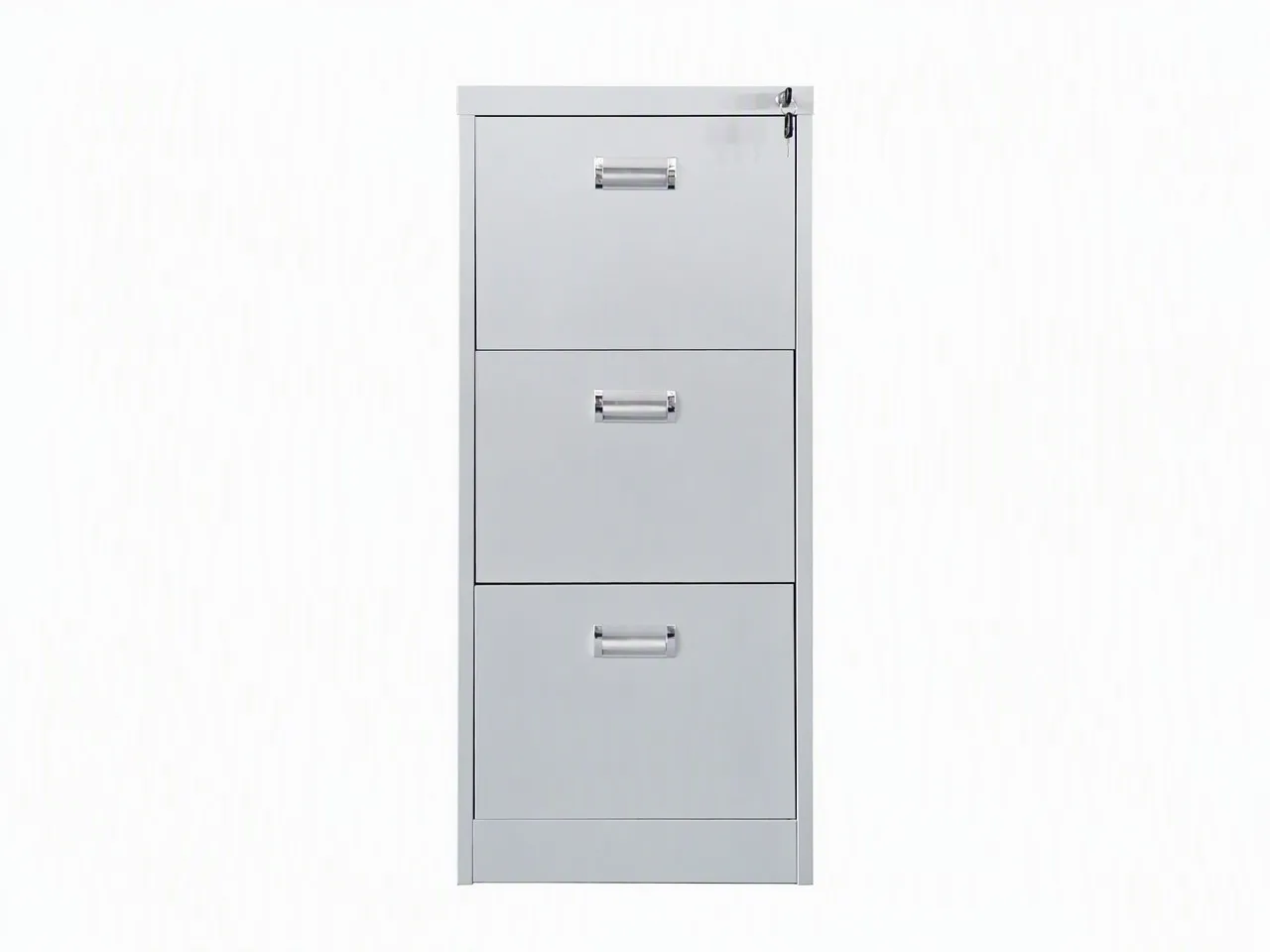
How Many Drawers? Steel Filing Cabinet Height by Drawer Count
Drawer count is really a height decision. A 2-drawer steel filing cabinet is about 28″ tall — desk height, which is why you’ll see them doubling as printer stands. A 3-drawer lands around 40″. A 4-drawer hits about 52″, which is the sweet spot for most offices: deep enough to matter, low enough that the top drawer stays reachable without a step stool. A 5-drawer runs 62–65″ and belongs in high-density archives, not a reception area.
For planning, budget roughly 300–400 hanging folders per drawer on letter width, fewer for legal. Multiply your active files by that number, and you’ll know whether you need two 2-drawer units or one 4-drawer before a single quote arrives.
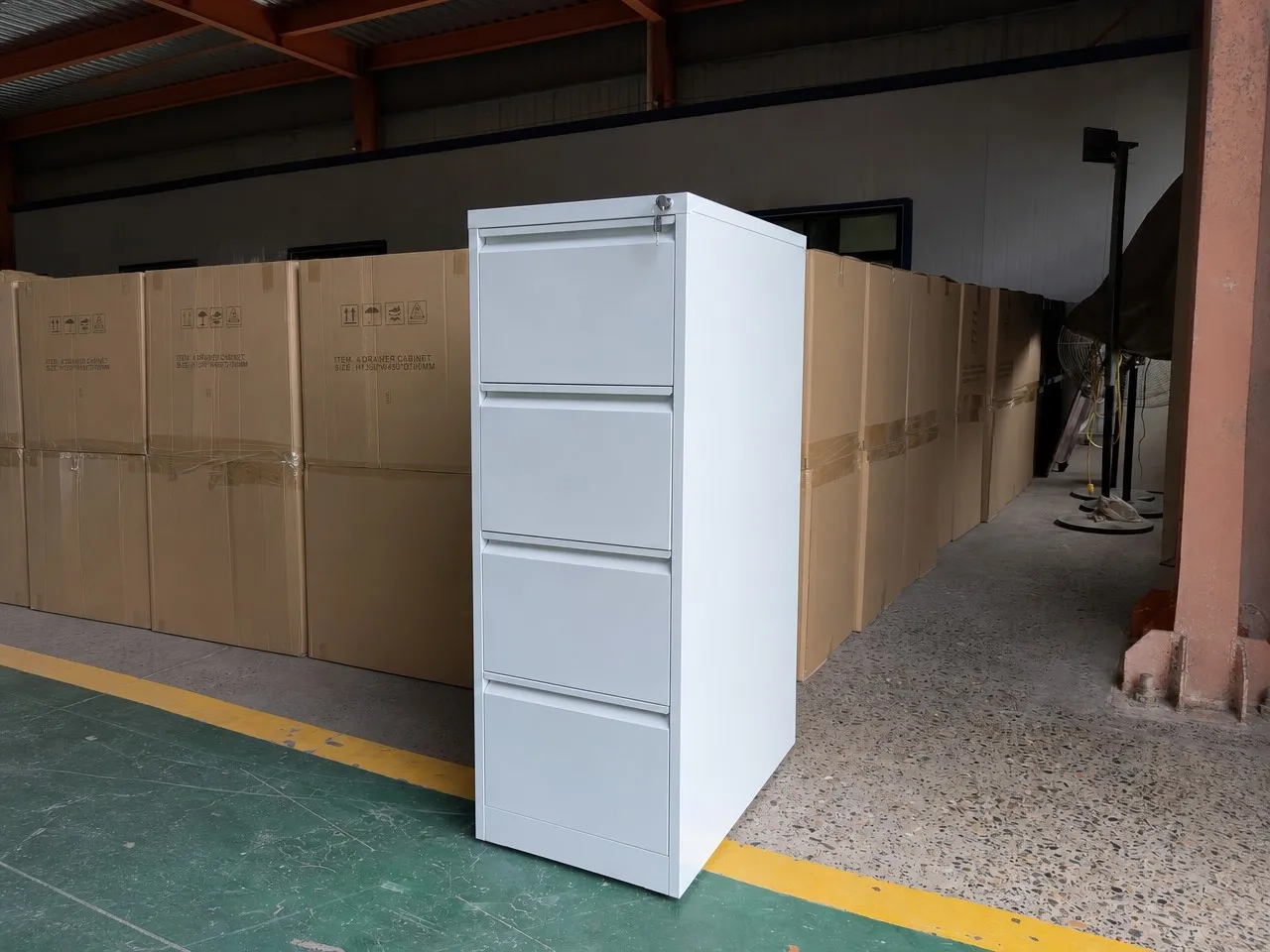
Vertical or Lateral? Which Steel Filing Cabinet Fits Your Room
Vertical cabinets hug walls and pack into narrow gaps — a 15″ footprint is small enough to tuck beside a door. Lateral cabinets eat wall width but give you a flat top that works as a work surface, and their shallow depth keeps the room feeling open. If your space is a 3-meter-wide corridor or a small back office, vertical is almost always the answer. If you have a dedicated filing wall or a shared workspace where the cabinet doubles as a counter, go lateral.
What to Check Before You Order Steel Filing Cabinets
- Steel thickness: 0.5–0.7 mm cold-rolled steel handles normal office use. Spec 0.8–1.0 mm for high-traffic floors, archives, or government tenders.
- Drawer slides: full-extension ball-bearing slides cost a little more and save a lot of frustration when drawers are loaded to the back.
- Locks: cam locks are the budget default; bar locks and electronic locks are worth it for sensitive files.
- Finish: powder coating beats paint for scratch resistance. Check that edges are folded or rolled — sharp edges are the #1 complaint we hear from offices.
- Fire rating: only relevant if the cabinet is for legal/insurance retention. Standard cabinets are not fireproof.
- Delivery form: KD (knock-down) units cut freight costs on export orders; assembled units save installation time. Ask which your supplier includes.
Matching Steel Filing Cabinet Sizes to Real Office Scenarios
A two-person consulting office usually needs one 2-drawer letter cabinet per person. A law firm drafting room should be on legal 4-drawer units, full stop. A hospital admin floor with mixed paperwork does well with lateral units for shared files plus vertical units for individual stations. And if you’re fitting out employee dormitories or staff changing areas at the same time, our steel locker size guide covers the other half of that fit-out.
Steel Filing Cabinet Sizes: FAQ
How tall is a 4-drawer steel filing cabinet?
About 52 inches (roughly 1.32 m). A 2-drawer runs about 28″, and a 3-drawer lands near 40″.
What is the difference between letter and legal size file cabinets?
Letter cabinets are about 15″ wide and 25″ deep; legal cabinets are about 18.25″ wide and 3–4″ deeper to hold 8.5″ x 14″ paper.
How deep is a standard filing cabinet?
Most vertical steel filing cabinets run 25–28.5″ deep. Letter models sit at the shallow end, legal models at the deep end.
Are lateral file cabinets wider than vertical ones?
Yes — lateral cabinets are typically 30–42″ wide and only 15–20″ deep, the reverse of vertical cabinets.
What steel thickness should a commercial filing cabinet have?
0.5–0.7 mm for standard office use; 0.8–1.0 mm for heavy-duty, high-traffic, or tender requirements.
And when you’re comparing suppliers, the factory matters as much as the dimensions — our guide to the top steel office furniture manufacturers in china walks through ten verifiable manufacturers, so you can benchmark sourcing options with confidence.


