 Skip to content

A facilities manager in Dubai once sent me photos of a five-year-old filing cabinet covered in rust blooms and asked whether the factory had shipped him defective product. The cabinet was fine when it left our line. The problem was the cleaning crew: they’d been wiping it down with an acidic descaler meant for bathroom tile. The coating was chemically etched, the steel underneath exposed, and the humid coastal air did the rest in about eighteen months.
Metal office furniture is genuinely low-maintenance — but “low” is not “zero.” Here’s the care routine we recommend to every buyer, based on what actually kills steel furniture in the field.

Know What You’re Caring For: The Powder Coat
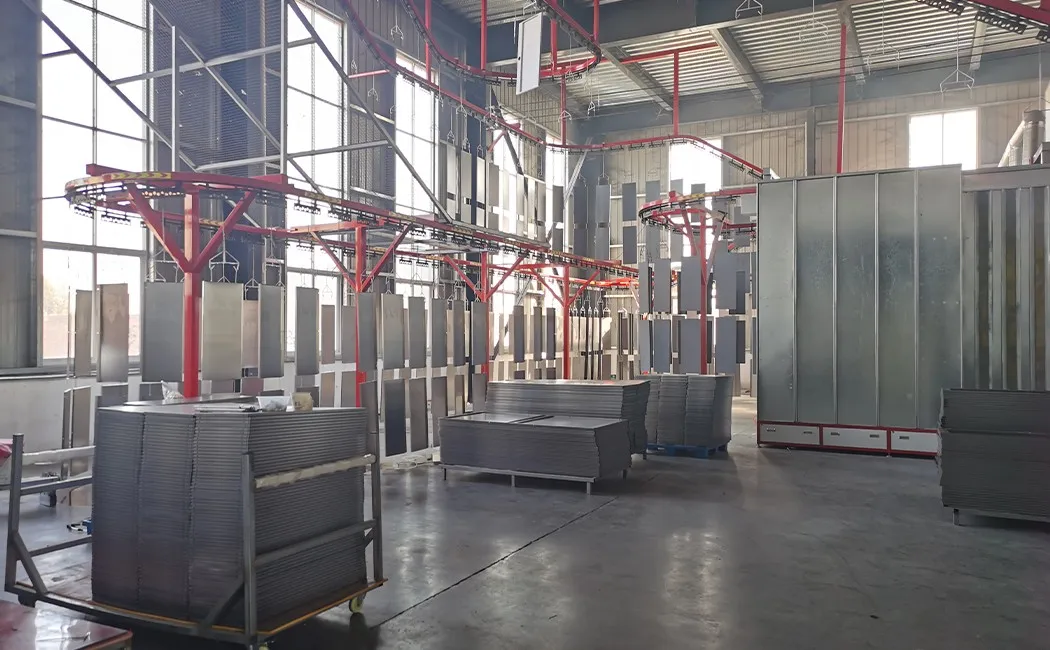
Almost all modern steel office furniture is finished with electrostatic powder coating — a dry polymer powder that’s charged, sprayed onto the grounded steel panels, and cured in an oven into a hard, continuous film. If you want the full picture of how that finish is applied, our walkthrough of how steel lockers are made covers the pre-treatment and coating line.
Why this matters for maintenance: the powder coat itself cannot rust. It’s plastic, not metal. Rust only starts where the coating is broken — a chip from a dropped tool, a deep scratch from a key, a worn edge from years of contact. So the entire maintenance philosophy is simple: protect the coating, and repair any break in it quickly.
Routine Cleaning: Boring Is Correct
The right cleaning kit is almost embarrassingly simple:
- A soft microfiber cloth
- Warm water with a few drops of pH-neutral dish detergent
- A dry cloth for the final wipe
Wipe down, rinse the cloth, wipe again, dry. That’s it for weekly or monthly cleaning depending on traffic.
What you should never use:
- Abrasive pads or steel wool — they leave micro-scratches that dull the finish and trap dirt
- Acidic cleaners (descalers, toilet bowl cleaners, vinegar concentrates) — they chemically etch the coating, as my Dubai client discovered
- Solvent-based cleaners (thinners, strong degreasers, acetone) — they can soften or stain the polymer layer
- Steam cleaners — forced hot moisture finds its way into seams and screw holes
If your cleaning contractor services bathrooms and offices in one pass, make sure the office furniture gets its own neutral products. This single instruction prevents most of the coating damage we see in warranty photos.

Rust and Chips: Fix Them in the First Week, Not the First Year
Here’s the thing nobody tells you about rust on coated steel: it doesn’t stay where it starts. Once bare steel is exposed, corrosion creeps under the surrounding coating, lifting it from the inside. A 3 mm chip left alone for a year in a humid climate becomes a 3 cm rust bloom.
The fix takes five minutes:
- Lightly sand the spot with fine-grit sandpaper (240–400 grit) until you see clean, bright metal
- Wipe away all dust with a dry cloth
- Apply a matching touch-up paint — most factories, including us, can supply a small touch-up pen or aerosol in your order’s exact color — or a cold-galvanizing spray for areas that won’t be visible
Check high-risk spots during your rounds: the bottom 10 cm of cabinets (mop water and floor cleaning), edges near door handles, and anywhere trolleys or equipment pass close by.
Hardware: Hinges, Locks, and Slides
Moving parts wear faster than panels. The routine:
- Hinges and lock barrels: one drop of light machine oil or a short burst of silicone spray, once or twice a year. In schools, gyms, and factories — hundreds of cycles a day — do it every 3–4 months.
- Drawer slides: wipe out dust and paper debris, then a light silicone spray. Drawer slides fail from grit, not from use.
- Keys and locks: if a lock starts sticking, graphite powder works better than oil — oil attracts dust that turns into grinding paste.
And one habit worth enforcing: doors and drawers should close with a push, not a slam. Repeated slamming loosens hinge screws and deforms door alignment long before the steel itself gives out.
Loading and Use: The Quiet Killers
Steel furniture fails mechanically before it fails cosmetically, and the cause is almost always overloading. A few rules of thumb:
- Shelves: distribute weight evenly and stay within the rated load. Stacking full archive boxes on one side of an adjustable shelf bows it within months.
- Top surfaces: filing cabinets and lockers aren’t designed as load-bearing platforms. A printer is fine; a box archive is not.
- Wet items: don’t store damp mops, umbrellas, or gym bags directly against panels for long periods in unventilated compartments — trapped moisture is exactly the environment rust needs. For gym and pool changing rooms, specify ventilated door designs; our school and gym locker guide covers which configurations suit high-moisture use.
Environment matters as much as use. Steel furniture in a dry office will outlive the same unit in an unventilated basement or a coastal warehouse. If your site is humid or salty, say so at the sourcing stage — the right factory will adjust the pre-treatment and coating spec rather than ship you a standard interior product for a harsh environment. It’s one of the checks we list in our roundup of the top steel office furniture manufacturers in China.
The Annual Inspection Checklist
Once a year, walk the furniture with this list. Ten minutes per floor, and you catch every problem while it’s still a five-minute fix:
| Check | What to look for | Action if found |
|---|---|---|
| Coating condition | Chips, deep scratches, dull etched patches | Sand + touch-up paint |
| Rust spots | Orange bloom, especially bottom 10 cm and edges | Sand to bare metal + seal |
| Hinges and doors | Sagging doors, loose screws, squeaks | Tighten screws, oil hinge pins |
| Locks | Sticking keys, worn barrels | Graphite powder; replace lock if worn |
| Drawer slides | Grinding, misalignment | Clean grit + silicone spray |
| Shelves and load | Bowed shelves, overloaded tops | Redistribute load, add shelf support |
| Levelers and feet | Wobbly units, missing feet | Re-level; replace feet (protects against floor moisture) |
| Ventilation | Musty smell inside compartments | Improve airflow; dry out; check for trapped damp items |
That’s the entire program. No special products, no contractor, no budget line — just a cloth, a drop of oil, a touch-up pen, and one walk-through a year.
When Maintenance Can’t Save It
Being honest here: some furniture isn’t worth maintaining. If a unit was built with thin steel and a poor pre-treatment base — the coating was going to fail on schedule no matter how carefully you clean. If you’re replacing rather than repairing, the buying stage is where lifespan is really decided: steel thickness in millimeters, the number of pre-treatment stages, and coating thickness. Our steel locker sizes and dimensions guide explains the thickness bands, and the same questions apply to cabinets and shelving.
Frequently Asked Questions
How do you clean powder-coated metal furniture?
Use a soft microfiber cloth dampened with warm water and a pH-neutral detergent, then wipe dry. Avoid abrasive pads, steel wool, and solvent-based or acidic cleaners — they scratch or dull the powder coat and expose the steel underneath.
How do you remove rust from a metal filing cabinet or locker?
Lightly sand the rusted spot with fine-grit sandpaper until you reach bare, clean metal, wipe away the dust, and apply a matching touch-up paint or cold-galvanizing spray. The goal is to seal the bare steel from moisture again — untreated rust spreads under the surrounding coating.
How often should you lubricate cabinet hinges and locks?
Once or twice a year for normal office use; every 3–4 months in high-traffic environments like schools and gyms. Use a light machine oil or silicone spray on hinge pins and lock barrels — a drop is enough, excess oil attracts dust.
Does powder-coated steel furniture rust?
The powder coat itself does not rust — it is a plastic polymer layer. Rust starts only where the coating is scratched through or chipped and bare steel is exposed to moisture. That is why chips and deep scratches should be touched up promptly.
How long does metal office furniture last?
A well-made powder-coated steel locker or cabinet, kept dry and with chips touched up, typically stays in service 10–20 years. The lifespan is decided less by age and more by coating condition, humidity, and how heavily doors, hinges, and shelves are loaded.


